
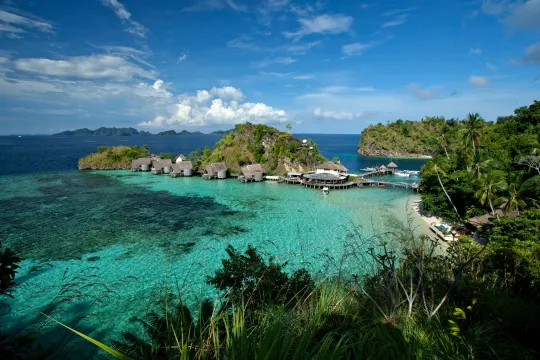
Climate Change in the Marshall Islands
Provided by: American Museum of Natural History|Published on: November 18, 2022|Last updated: July 16, 2026
Grades: 8, 9, 10, 11, 12
Type: Videos
Subjects: Earth and Space Sciences, Civics, Geography
Authors: American Museum of Natural History
Location: Oceania
This resource has been reviewed by SubjectToClimate's climate scientists and verified for scientific accuracy and up-to-date information. Learn about our review process →
This resource has been reviewed by SubjectToClimate's climate scientists and verified for scientific accuracy and up-to-date information. Learn about our review process →
Synopsis
- This video looks at how the people of the Marshall Islands are affected by climate change and how they are adapting to these effects through community support.
- The video follows the work of researchers who traveled to the Marshall Islands to better understand what the communities need and how they can be supported.
Teaching Materials
Positives
- This is a great way to introduce students to climate adaptation.
- The video shows clips of people in the Marshall Islands and interviews with the lead researchers.
Additional Prerequisites
- The resource includes a transcript of the video.
- Students should have a general knowledge of climate change's effects on coastal communities (e.g., sea level rise, changing migration patterns of marine fauna, etc.).
Differentiation
- Have students consider what role communities can play in adapting to and mitigating climate change.
- As a follow-up activity, students can research the impacts of climate change on specific communities and how they adapt to climate change.
- Have students reflect on what they (and the international community) can learn from the people of the Marshall Islands.
- This resource can also be used in health classes during lessons about the impacts of climate change on health, primarily related to access to food, water, and shelter.
This video spotlights the impacts of climate change on the Marshall Islands. Anthropologist Jennifer Newell led her team to study how Marshall Islanders respond to the impact of climate change and extreme weather events in order to replicate the solutions in Pacific Islands and other vulnerable communities. From the study, the people of the Marshall Islands have adapted in so many ways but one interesting feature is their concept of "lale doon" - which means to take care of one another. So through this cultural concept, the people have (overtime) developed the ability to unite together as one formidable force to respond to climate change impacts at the local scale. This resource is insightful and is recommended for teaching.
Teaching Tips
Standards
Resource Type and Format
Scientist Reviewed
This resource has been reviewed by SubjectToClimate's climate scientists and verified for scientific accuracy and up-to-date information. Our review process ensures that every resource in our library reflects the current state of climate science.
Learn about our review process →