
How Can We Take Care of Our Commons?
Provided by: The Cloud Institute for Sustainability Education|Published on: April 29, 2026|Last updated: July 16, 2026
Grades: K, 1, 2
Type: Lesson Plans
Subjects: Social Studies, English Language Arts
Authors: The Cloud Institute for Sustainability Education, TerraCycle
Location: Earth
This resource has been reviewed by SubjectToClimate's climate scientists and verified for scientific accuracy and up-to-date information. Learn about our review process →
This resource has been reviewed by SubjectToClimate's climate scientists and verified for scientific accuracy and up-to-date information. Learn about our review process →
Synopsis
- In this lesson, students will read a story to understand what a commons, or common area, is and why they should help take care of it.
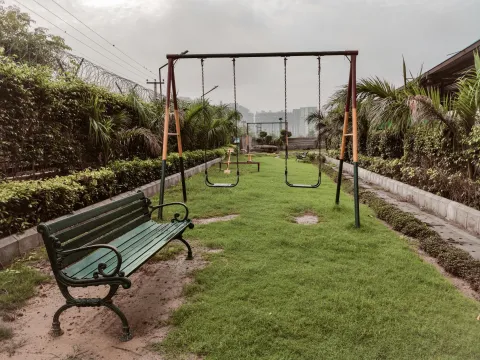
- Students will identify examples of common and private property and create a list of goals and rules for their classroom commons.
Teaching Materials
Positives
- Students will appreciate having their input valued in creating rules for their classroom commons.
- The story does a great job of introducing the concepts of private property and common spaces in a way that young students can understand.
Prerequisites
- The story describes the characters picking up objects in the park and then washing their hands. To ensure students' safety, teachers may want to urge them to wear gloves and never pick up anything that looks sharp.
- This story builds on students' understanding that nature takes care of natural materials, which is introduced in this lesson.
Differentiation & Implementation
- This lesson may be useful at the beginning of the year to introduce the concept of taking care of their commons as a norm for how students will behave in school.
- Teachers can easily make connections to citizenship and being a good citizen by explaining that good citizens take care of their community.
- To make connections to ecology and the environment, teachers can pause while reading the story to point out that leaving things like cans and plastic out in nature can harm the environment. Teachers can also use this video, which uses straws as an example of single-use plastic pollution.
- As an extension, students can explore their school playground as a commons and interview other students and teachers about potential goals and rules for taking care of this commons.
This book and lesson introduce students to the idea of the commons, or common areas, as opposed to private property. It also underscores the importance of everyone doing their part to clean up and care for the commons. Students will be able to reflect on how this idea applies to their lives. The story builds on the idea that nature can decompose natural items, but not human-made items. The information presented is accurate, and this resource is recommended for teaching.
Teaching Tips
Standards
Resource Type and Format
Scientist Reviewed
This resource has been reviewed by SubjectToClimate's climate scientists and verified for scientific accuracy and up-to-date information. Our review process ensures that every resource in our library reflects the current state of climate science.
Learn about our review process →