
Polar Bears and Arctic Sea Ice
Grades: 6, 7, 8
Type: Videos
Subjects: Biology, Geography
Authors: Polar Bears International
Location: Asia, Europe, North America > United States, Polar Regions
This resource has been reviewed by SubjectToClimate's climate scientists and verified for scientific accuracy and up-to-date information. Learn about our review process →
This resource has been reviewed by SubjectToClimate's climate scientists and verified for scientific accuracy and up-to-date information. Learn about our review process →
Synopsis
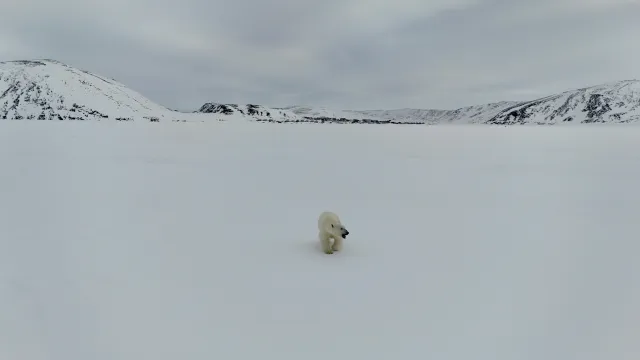
- In this brief video from Polar Bears International, students will understand how sea ice loss is affectting polar bear populations.
- Students will learn that there are different types of sea ice and that sea ice in the Arctic may disappear before the end of the century.
Teaching Materials
Positives
- This video uses many visual aids and maps to illustrate the concepts.
- Students will benefit from the video's call to action, connecting human activities to the sea ice loss.
Prerequisites
- Students should understand that climate change and global warming cause ocean water to warm over time and that there is a reinforcing feedback loop that accelerates sea ice loss due to the change in albedo.
Differentiation & Implementation
- To make geography connections, students can choose one of the nations with polar bear populations and research their geography, political makeup, and environmental actions.
- Teachers can use this video as a hook for a broader lesson about sea ice loss. Teachers may want to use this lesson about the connection between Earth's systems and sea ice.
- Teachers can give students a map of the Arctic and other northern continents and have students color and label the sea ice regions and countries with polar bear populations. Students can also add color-coding for the subpopulations and their trends.
- Using this video, teachers can make connections to the Sustainable Development Goals, especially SDG 13, Climate Action, SDG 14, Life Below Water, and SDG 15, Life on Land.
This video provides basic information about polar bears and Arctic sea ice, and explains how polar bears are affected by seasonal changes in sea ice and by climate change. The explanations are short, simple, and complete. The information presented is accurate, and this resource is recommended for teaching.
Teaching Tips
Standards
Resource Type and Format
Scientist Reviewed
This resource has been reviewed by SubjectToClimate's climate scientists and verified for scientific accuracy and up-to-date information. Our review process ensures that every resource in our library reflects the current state of climate science.
Learn about our review process →