
Why is This Stinky Ocean Floor "Muck" a Treasure Trove?
Provided by: The Kid Should See This|Published on: June 20, 2025|Last updated: July 16, 2026
Grades: 9, 10, 11, 12, AP
Type: Articles/Websites
Subjects: Chemistry, Biology
Authors: Schmidt Ocean, The Kid Should See This
Location: South America
This resource has been reviewed by SubjectToClimate's climate scientists and verified for scientific accuracy and up-to-date information. Learn about our review process →
This resource has been reviewed by SubjectToClimate's climate scientists and verified for scientific accuracy and up-to-date information. Learn about our review process →
Synopsis
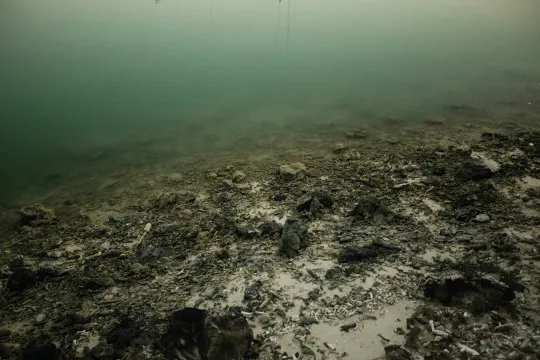
- This resource includes an article and two videos describing the work of a research team studying core samples from the ocean floor in the Chile region of the Pacific Ocean.
- Students will learn about the story these core samples tell about the geologic history and the importance of the benthic organisms that feed off of the methane produced by microbes in the mud for the global carbon cycle and local ecosystems.
Teaching Materials
Positives
- The videos and the article are relatively brief, providing natural stopping points teachers can use for discussion or clarification.
- Students will benefit from hearing from researchers on the team who are clearly passionate about their work.
Prerequisites
- Students may benefit from having the terms chemosynthesis, anoxic, and others defined before exploring this resource.
- Students should recognize methane as a greenhouse gas.
Differentiation & Implementation
- Some parts of the videos are not in English. Teachers will need to turn on the subtitles/CC for the translation to appear. Teachers may also want to slow the video playback speed to allow students to read the text.
- Teachers can pair the article and videos with a discussion about greenhouse gases and the ocean's role in mitigating greenhouse gas emissions.
- After watching, students can demonstrate their understanding of the material by answering the question, "Why is it important to study mud below the seafloor's surface?"
- This video may be useful in bilingual science classes using English and Spanish.
- This connects to climate science as an integral part of the carbon cycle and it relates to the role of organisms within ecosystems to regulate the release of carbon and methane.
This resource introduces students to a sea floor sediment core expedition. The video features interviews with many of the scientists engaged in the project, as well as a video of sample collection and analysis. This research is strongly grounded in climate science, as researchers search for microorganisms that feed on methane, a powerful greenhouse gas. This resource is recommended for teaching.
Teaching Tips
Standards
Resource Type and Format
Scientist Reviewed
This resource has been reviewed by SubjectToClimate's climate scientists and verified for scientific accuracy and up-to-date information. Our review process ensures that every resource in our library reflects the current state of climate science.
Learn about our review process →