Civic Engagement Lesson: Town Hall Role-Play
Lesson Plan
2 hours 35 minutesGrades9, 10, 11, 12Civics
This resource has been reviewed by SubjectToClimate's climate scientists and verified for scientific accuracy and up-to-date information. Learn about our review process →
Written by Amy Sabbadini, Oregon Educators for Climate Education
About this lesson
In this lesson, students explore civic engagement through a town hall role-play to allocate scarce water resources and propose ideas for climate resiliency that honor multiple perspectives.
Inquire: Students work in groups to rank ten purposes of a river and explain how to balance a community’s competing needs for water.
Investigate: Students represent stakeholders in the Deschutes River Watershed, research it, and write testimony about the allocation of water.
Inspire: Students engage in a mock Deschutes Basin Water Collaborative Town Hall meeting, reflect on the process, and choose a follow-up action.
Preview the lesson plan
Better on a bigger screen? Open it in its own tab.View Lesson Plan
Everything you need to teach it
How to edit these materials (video)Teaching tips
Suggestions
- This lesson can be taught in a social studies unit on natural resources, an ELA unit on public speaking, or as an extension to a science lesson on the impact of climate change on ecosystems.
- The lesson can be spread out over 3 to 4 class periods, with one class period for the Inquire section and Step 1 of the Investigate section, one class period for Steps 2 and 3 of the Investigate section, one class period to conduct the town hall, and one class period for follow-up discussions and selecting an action.
- Follow-up activities like weighing policy alternatives or implementing a community action project will take additional class periods.
- Students could connect with local stream restoration projects or organizations as a hands-on learning experience.
Prerequisites
- Students should have an understanding of media literacy and best research practices.
- Students should have a basic understanding of rhetorical structure and devices for persuasion in oral delivery techniques.
Differentiation
- Students who need instruction on rhetorical methods and devices can use these resources:
- 41 Rhetorical Devices That Will Make Your Words Memorable
- How to Use Rhetoric to Get What You Want
- PBS Literary Elements & Techniques: Imagery and Figurative Language.
- The vocabulary list at the end of the Student Document can be shared with students who need reading comprehension support.
- More advanced students can be assigned the roles of the DBWC panel members, who will be in charge of facilitating the town hall and understanding the perspectives of each of the stakeholders.
- As a follow-up, the class could develop and lead a school community education campaign to spread awareness of water-saving techniques.
From the scientist review
The lesson allows students to propose ways to solve water scarcity in their local communities and engage with key stakeholders and policymakers to design policies that will enable local communities in Oregon to manage their water resources while building their resilience to climate change. The lesson and all the accompanying materials were reviewed and are suitable for teaching.
Want this to fit your class?
Add your location for local examples, questions, and action ideas.
About the teacher writers
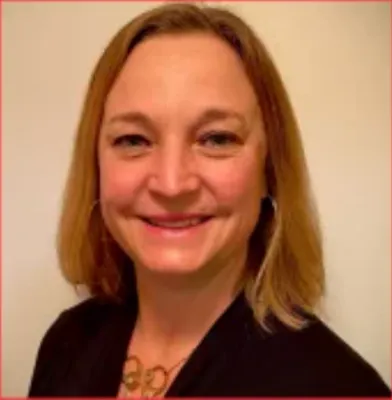
Amy Sabbadini
Civics Learning Project
Amy Sabbadini holds a Bachelor's degree in Environmental Studies from the University of California, Santa Barbara and a Master of Education. She has 20 years of experience teaching International Baccalaureate World Religions, U.S. History, U.S. Government, World History, World Issues, Geography, Speech and Debate, Language Arts, and Health for grades 8 through graduate school. Amy holds certifications in bilingual education, secondary language arts, secondary social science, social science, and English as a Second Language, as well as National Board Certification in Adolescent Social Science. She currently serves as an instructor in the Oregon State University Cascades Master of Teaching program and as a Regional Program Manager for the Civics Learning Project.
Oregon Educators for Climate Education
Website: https://www.oregonclimateed.org/
Oregon Educators for Climate Education (OECE) is a statewide group of educators working toward Oregon legislation that would mandate the integration and infusion of climate change for PK-12 education across all core subject areas.
Our steering committee is comprised of current and retired K-12 educators, as well as high school students. While most of us reside and work in the Willamette Valley, we are seeking connection and input from stakeholders from regions across Oregon. We are inclusive and invite diverse voices to join us!
Website: https://www.oregonclimateed.org/