

Ears, Tusks, Trunks, and ... Whiskers?
February 20, 2026

If you were asked to list animals well-known for their whiskers, what would you say? Cats? Rats? Maybe walruses? A new study suggests that an unlikely species should join them: elephants.
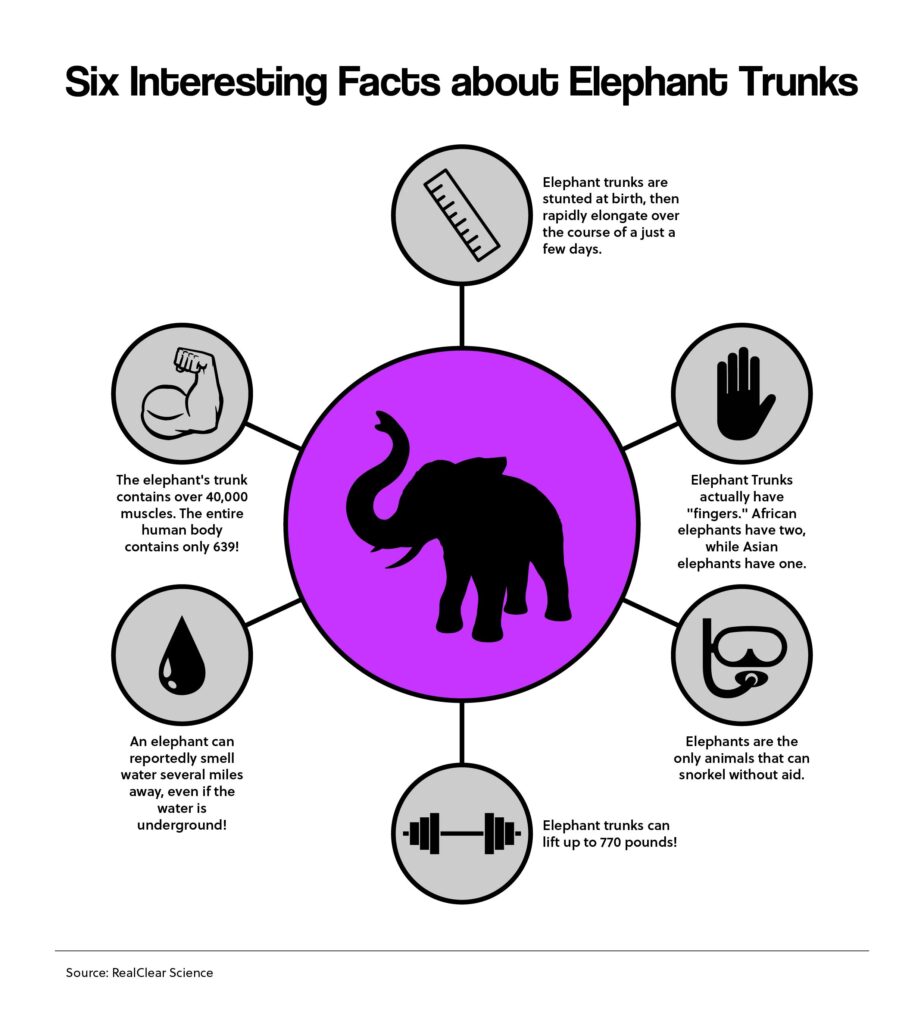
An elephant’s whiskers are found up and down its trunk. That makes sense, biologists say. A pachyderm’s nose is actually an extension of its upper lip. Each elephant possesses hundreds of specialized hairs on its trunk.
“The boneless elephant trunk is covered with about 1000 whiskers,” biologists wrote in the study. It was published this month in the journal Science. Their whiskers are not like a rat's or mouse's. Elephants can't twitch them like a rat could. Their whiskers also can't regrow. That led the researchers to wonder if elephant whiskers were different in other ways, too.
The team looked at the whiskers using 3D imaging and an electron microscope. They found that elephant whiskers resembled the flattened, oblong shape of a blade of grass. Because an elephant’s whisker is soft at the tip and stronger at the base, nerves in the trunk can tell the elephant exactly what it’s touching and how hard. That allows elephants to perform tricky tasks like peeling bananas, even though their eyesight is poor.
“Each whisker on their trunk acts as a tactile sensory organ, extending their tactile range,” Andrew Schulz told Reuters. He is one of the study's co-authors. “They constantly feel their way through their surroundings with their trunks, searching for food and exchanging social touch.”
Reflect: If you could have an extra sense that helped you interact with the world around you, what would it be?
News brought to you by 
Read More News Stories Today!